
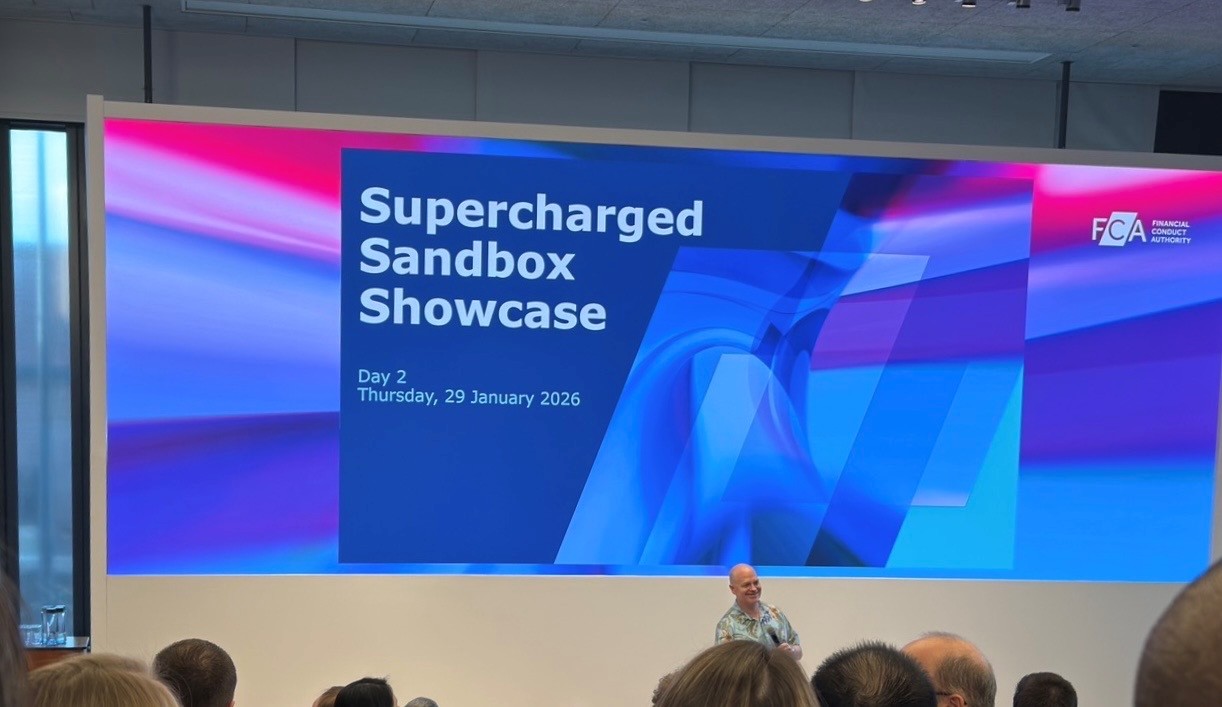
In the fast-moving world of financial technology, staying ahead requires continuously learning and looking beyond current norms. The Cardtrend team recently travelled to London to attend the FCA Supercharged Sandbox Showcase, an event that provided valuable insight into one of the most significant emerging areas of financial innovation: agentic AI. Rather than focusing on abstract concepts, the showcase was informative in demonstrating practical, real-world use cases that are already being developed to operate dynamically within regulated environments.
Why Agentic AI is the New Frontier for Fintech
To understand why agentic AI is gaining traction across financial services and other regulated industries, it is important to distinguish it from traditional artificial intelligence systems. Much of today’s AI is reactive by design, responding to direct prompts, following predefined rules or producing outputs based on narrow instructions. While effective, these systems typically rely on frequent human input to progress from one task to another.
One of the key learnings from the showcase was how agentic AI represents a fundamental shift from this model. Rather than simply responding, agentic AI systems are designed to operate with a degree of independence, pursuing broader objectives within clearly defined constraints. Their ability to reason, plan and act autonomously makes them particularly well suited to complex, real-world financial applications.
The Core Capabilities of Agentic AI
Based on the use cases presented at the FCA Supercharged Sandbox Showcase, several defining capabilities of agentic AI stood out:
- Planning and Execution: Agentic AI can translate high-level goals into smaller, actionable steps and manage multi-stage workflows autonomously. This enables systems to oversee complex processes end-to-end, rather than functioning as isolated, single-task tools.
- Dynamic Decision-Making: Unlike static rule-based models, agentic AI can adapt its behavior in real time. It evaluates changing data, context and constraints, adjusting decisions as conditions evolve; an essential capability in fast-moving financial environments.
- System and Agent Interaction: These systems can interact with multiple digital platforms, APIs and even other AI agents. This enables coordinated decision-making across systems, unlocking more intelligent automation and orchestration at scale.
- Continuous Learning and Optimization: Through ongoing data inputs and feedback loops, agentic AI can refine its strategies and improve performance over time. This allows outcomes to become more accurate, efficient and context aware as the system gains experience.
Transforming Financial Services within Regulatory Guardrails
The potential for agentic AI in the financial sector is vast, representing a move toward systems that act with a high degree of independence to achieve specific goals. By designing these systems to function with greater autonomy, businesses can potentially unlock unprecedented levels of operational optimization. Crucially, the FCA Supercharged Sandbox Showcase demonstrated that this innovation isn’t just theoretical; it is about building real-world solutions that can adapt and make decisions dynamically while staying strictly within regulatory guardrails.
The showcase highlighted several key areas where agentic AI is already shifting the landscape:
- Intelligent Automation & Complex Workflows: Beyond simple task execution, agentic AI can plan and execute multi-step tasks. For firms like us, this means moving toward streamlining complex workflows that previously required constant human intervention, allowing the system to manage the process from end-to-end.
- Real-Time Compliance Monitoring: Because agentic AI can make decisions based on changing inputs, it is uniquely suited for oversight in fast-moving environments. It can continuously monitor data against regulatory requirements, providing a more dynamic and responsive form of compliance than traditional static models.
- Proactive Fraud Detection: A major shift is occurring from reactive to proactive financial tools. Agentic AI systems continuously learn and improve outcomes over time, allowing them to identify emerging patterns of financial crime and stop them before they escalate, rather than just flagging them after the fact.
- Advanced, Context-Aware Customer Support: By interacting with other systems or agents, these tools provide a smarter, more integrated level of support. They don’t just answer questions; they can navigate different platforms to resolve issues autonomously, creating a more seamless and responsive user experience.
Cardtrend’s Vision: Architecting the Future of Proactive Fintech
For Cardtrend, the FCA Supercharged Sandbox Showcase was a valuable learning experience that helped clarify how agentic AI could shape the future of digital financial infrastructure. The insights gained reinforced the importance of moving beyond purely reactive models and exploring how agentic systems could support more proactive, adaptive solutions.
As we begin to move from theory toward experimentation, our approach remains collaborative and considered. We are focused on understanding how agentic AI can operate responsibly within complex, highly regulated environments and how it might evolve from a passive tool into a more active contributor to client outcomes. At this stage, our Research and Development team is investigating how the core pillars of agentic AI — autonomous planning, dynamic decision-making and multi-system interaction could be integrated in a controlled and meaningful way.
Our exploratory roadmap is currently focused on two key areas:
- Exploring New Models of Operational Excellence: We are experimenting with systems that go beyond simple instruction-following; examining how autonomous, multi-step workflows could reduce friction, remove bottlenecks and streamline complex processes end-to-end.
- Investigating Proactive Financial Intelligence: We are researching how a new generation of proactive financial tools might continuously learn and adapt, with the potential to anticipate client needs and surface opportunities earlier, rather than responding only after events occur.
We are excited to continue learning, testing and refining our ideas as we explore what the future of intelligent finance could become. Stay tuned as our journey continues.

